Industrial circular economy in Finland: Why companies choose the Helsinki Ring of Industry
The Helsinki Ring of Industry region is emerging as a major hub for industrial circular economy investment and business in Southern Finland. The region combines industrial-scale material processing, advanced recycling technologies, manufacturing, logistics, and growing expertise in converting secondary materials into valuable industrial raw materials and products.
Across the region, industrial-scale material flows support a rapidly growing circular economy ecosystem. Plastics, metals, composites, recycled glass, construction materials, organic waste, and industrial side streams are processed and transformed into new raw materials, low-carbon construction products, renewable energy, and innovative food ingredients.
From waste streams to industrial raw materials
What makes the Helsinki Ring of Industry particularly attractive is that materials are not only collected and sorted in the region. Increasingly, industrial value is created through processing, refining and reuse.
Companies across the region represent multiple stages of the circular economy value chain, from collection and material recovery to manufacturing, energy production, and commercialization of new technologies. Together, they create an ecosystem where industrial symbioses, resource efficiency, and circular business models can scale.
For investors and growth companies, this creates opportunities in advanced recycling, circular manufacturing, renewable energy, industrial biotechnology, material innovation, and logistics solutions.
Why companies choose the Helsinki Ring of Industry for circular economy investments
The Helsinki Ring of Industry is a collaboration of ten municipalities surrounding the Finnish capital region. Together, we offer industrial land, a skilled workforce, excellent logistics connections, and a growing ecosystem for cleantech and circular economy businesses.
We combine industrial-scale recycling, circular manufacturing, renewable energy solutions, and emerging circular economy technologies within one growing ecosystem. For companies looking for predictable growth opportunities, available industrial sites, and strong material flows, the region offers a practical platform for the next generation of circular economy investments.
Industrial-scale material flows and excellent logistics
Plastics, recycled glass, metals, composites, construction materials, organic waste, and industrial side streams already form substantial industrial value chains across the Helsinki Ring of Industry. The region offers excellent access to Finland’s main highways, rail connections, ports, and international Helsinki-Vantaa Airport.
Cutting-edge technologies in operation
The Helsinki Ring of Industry combines established industrial operations with advanced recycling, separation, processing, and energy technologies. Recent investments are expanding capabilities in plastics recycling, composite processing, renewable energy, industrial biotechnology, and advanced material recovery.
Strong ecosystem of material processors and industrial users
The ecosystem includes companies that recover and refine secondary materials as well as manufacturers that use those materials directly in commercial production. The ecosystem is strengthened by a well-functioning network of technology providers, energy companies, industrial service providers, and logistics operators, as well as low-threshold access to municipal contacts and other public authorities.
Connections to international value chains
Materials processed in the Helsinki Ring of Industry are supplied to customers in Finland and international markets, while technologies, expertise, and commercial partnerships connect the region to global value chains.
Opportunities between existing value chains
Many of the most promising business opportunities exist between established operations. These include advanced sorting and identification technologies, higher-value material refining, new applications for recycled materials and industrial side streams, automation solutions, shared logistics, and industrial services.
Building industrial-scale value from material flows
Case Syklo: New technology for plastics recycling with industrial-scale capacity
Syklo is one of Finland’s fastest-growing circular economy companies and part of the Oulun Energia Group. Its plastics recycling facility in Hyvinkää is among the most significant new investments in Finnish plastics recycling, with a planned annual capacity of approximately 50,000 tons.
The facility uses density separation technology developed by UK-based Impact Recycling Ltd., enabling mixed plastics, including difficult-to-recycle black and colored rigid plastics, to be transformed into high-quality recycled plastic granulates. In addition, Syklo is developing biocomposites that combine recycled plastics with natural fibers for applications in sectors such as automotive, packaging, and electronics.
The investment strengthens the Helsinki Ring of Industry’s role as a location where advanced recycling technologies can be scaled to industrial production. It also creates opportunities for manufacturers, material technology providers, and companies seeking reliable sources of recycled raw materials.
Case Kuusakoski: Advanced recovery of composites, metals, and refrigeration appliances
Kuusakoski is one of Finland’s leading recycling and material processing companies. The company is expanding its capabilities in handling complex material streams, including composites, metals, and end-of-life refrigeration appliances.
Growing composite processing capacity enables difficult waste streams to be prepared for industrial co-processing, where plastics can replace fossil fuels and mineral fractions can substitute virgin raw materials. At the same time, new refrigeration appliance recycling capacity allows valuable metals and plastics to be recovered while refrigerants and other harmful gases are safely removed.
These investments demonstrate how increasingly complex products can be transformed into reusable resources while creating new opportunities across the circular economy value chain. They also strengthen the Helsinki Ring of Industry’s position as a hub for advanced material recovery and industrial-scale resource efficiency.
Case Teräskolmio: Connecting local metal recycling to European markets
Teräskolmio is a family-owned metal recycling company operating in Hyvinkää and Nurmijärvi. The company processes approximately 10,000 tons of ferrous and non-ferrous metals annually and supplies recovered materials to foundries, smelters, and industrial customers across Finland and Europe.
Beyond traditional recycling, Teräskolmio is increasingly focusing on higher-value material refining. Through a joint venture, cable waste is processed into 99% pure copper granulate for industrial customers in Central Europe, demonstrating how additional processing can significantly increase the value of recycled materials.
The company highlights the importance of strong regional recycling infrastructure combined with access to international markets. By transforming locally collected materials into globally traded industrial raw materials, Teräskolmio strengthens the circular economy ecosystem of the Helsinki Ring of Industry and demonstrates the commercial potential of value-added material recovery.
Case Kaiwur: Circular solutions for soil and construction materials
Kaiwur specializes in soil material processing, crushing, screening, and transport logistics. The company focuses on large-volume material flows that are essential for infrastructure development and the transition toward more resource-efficient construction.
Recycled soil, sand, and construction materials are refined for infrastructure and environmental projects, helping reduce the need for virgin materials while lowering transport-related emissions. Kaiwur has also developed solutions for recovering and reusing materials such as sanding sand while increasingly using biogas-powered transport equipment.
The company demonstrates that circular economy solutions are not limited to plastics and metals. Significant environmental and economic benefits can also be achieved through better management of high-volume construction and soil materials.
As demand grows for more sustainable infrastructure, Kaiwur showcases how local processing, material reuse, and efficient logistics can create practical circular economy solutions on an industrial scale.
Circular materials for energy-efficient construction
Case Saint-Gobain: Recycled glass integrated into industrial manufacturing
Case Saint-Gobain: Recycled glass integrated into industrial manufacturing
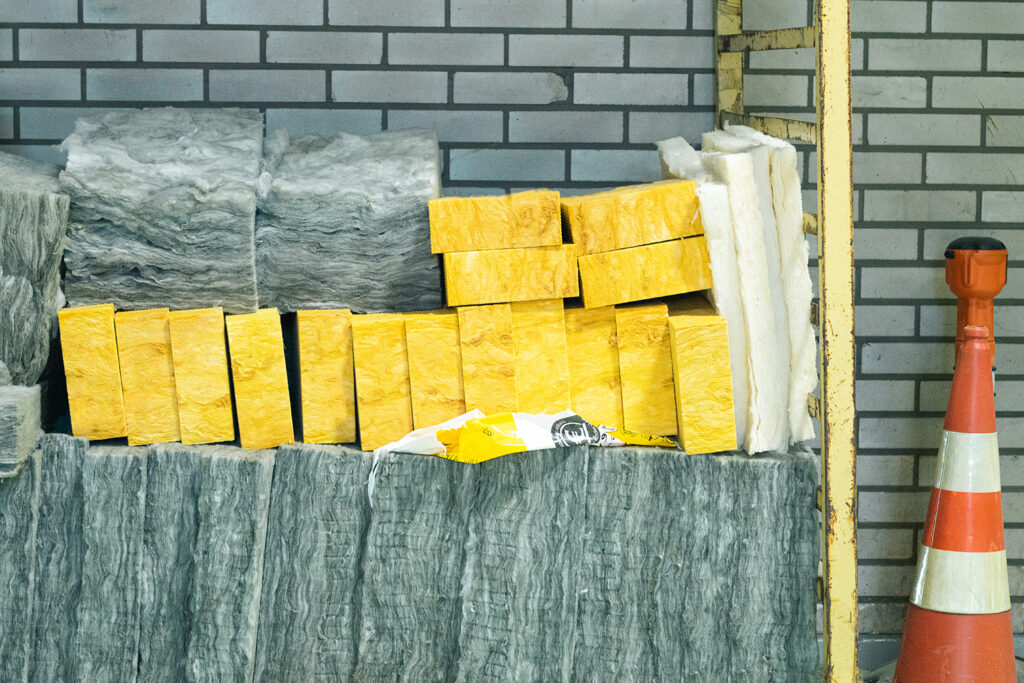
Saint-Gobain is one of the world’s leading construction materials companies and a major example of circular manufacturing within the Helsinki Ring of Industry. The company’s regional operations include Isover insulation and Chryso production in Hyvinkää, as well as Weber building materials manufacturing in Vihti.
The Isover plant is Finland’s largest industrial user of recycled glass, using approximately 35,000 tons annually. Recycled glass accounts for up to 85% of the raw materials used in insulation production, demonstrating how circular raw materials can replace virgin resources at industrial scale.
Saint-Gobain is also investing in electrification, energy efficiency, and low-carbon manufacturing. The new Chryso production unit further expands the company’s role in sustainable construction materials. Together with Weber’s construction materials business, these operations demonstrate how sustainability can be integrated throughout the construction value chain.
Read more
Case Fiberwood: Scaling bio-based material innovation
Case Fiberwood: Scaling bio-based material innovation
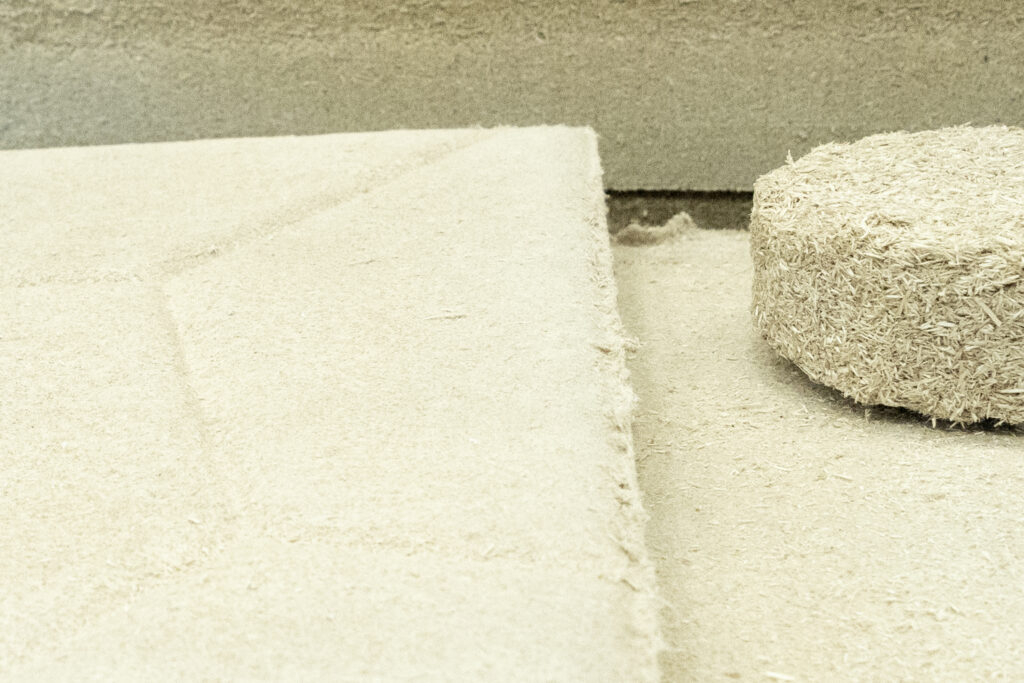
Fiberwood is a Finnish materials technology company developing fossil-free insulation and packaging materials from forest industry by-products and other natural fibers. Its products demonstrate how industrial side streams can be transformed into high-value solutions for construction and packaging applications.
The company has progressed from laboratory development to industrial-scale customer deliveries through its R&D and demonstration facility in Järvenpää. The plant enables customer-scale production while generating valuable data for future commercial manufacturing.
In addition to wood fibers, Fiberwood is exploring alternative raw materials including straw, hemp, oats, and beach grass. The resulting products are recyclable, microplastic-free, and designed to reduce dependence on fossil-based materials.
Fiberwood illustrates how innovation, renewable raw materials, and scalable production can create entirely new business opportunities. The company strengthens the Helsinki Ring of Industry’s position as a growing hub for advanced materials and circular economy innovation.
Read more
Creating new value from industrial side streams
Case Enifer: Turning industrial side streams into sustainable protein
Case Enifer: Turning industrial side streams into sustainable protein
Enifer is a Finnish biotechnology company building a commercial-scale production facility for PEKILO mycoprotein in Kirkkonummi. The project will create the world’s first commercial plant producing mycoprotein from industrial side streams, adding a new dimension to the region’s circular economy ecosystem.
Founded as a spin-off from VTT Technical Research Centre of Finland, Enifer commercializes a technology originally developed by the Finnish forest industry. The fermentation process converts industrial side streams into a high-protein fungal ingredient suitable for food and feed applications.
The new facility is designed to produce up to 3,000 tons of protein annually and is expected to meet the yearly protein needs of approximately 40,000 people. Enifer is already collaborating with international companies including Skretting, Purina, and Valio.
The project demonstrates how biotechnology can create entirely new value chains from underutilized resources and strengthen the region’s position in the circular bioeconomy.
Read more
Case Polar Night Energy: The world's largest sand battery uses industrial side streams
Case Polar Night Energy: The world's largest sand battery uses industrial side streams
The Helsinki Ring of Industry is home to the world’s largest operational Sand Battery, located in Pornainen and developed by Polar Night Energy together with local energy company Loviisan Lämpö. The project demonstrates how circular economy principles can support the transition to low-carbon energy systems.
The thermal energy storage system uses approximately 2,000 tons of crushed soapstone, a by-product from Tulikivi’s fireplace manufacturing. Instead of becoming waste, the material serves as a long-term storage medium for renewable thermal energy used in district heating and industrial applications.
The technology is expected to reduce emissions from the local heating system by nearly 70% while also supporting grid stability through participation in Finland’s reserve markets. The concept can be scaled further and adapted to use by-products from industries such as mining and steel production.
The project showcases how industrial side streams can create entirely new forms of value beyond traditional recycling. In addition, the Sand Battery named one of TIME magazine’s best inventions of 2025.
Read more
Case Auris Energy: Renewable fuels to international markets
Case Auris Energy: Renewable fuels to international markets
Auris Energy operates gas infrastructure that connects renewable gas production with end users in Finland and abroad. A key part of this infrastructure is the company’s grid injection point in Mäntsälä, located in the Helsinki Ring of Industry region, which enables renewable gases produced outside the gas network to be injected into Finland’s national gas grid.
Auris launched its grid injection service for biomethane in 2025, and the same infrastructure now also supports e-methane deliveries. E-methane produced by P2X Solutions is transported to Mäntsälä, where it is injected into Auris Energy’s gas grid before being delivered to Germany for use as fuel in heavy-duty transport. This marked the first time a Finnish-produced e-fuel was supplied to customers elsewhere in Europe.
The Mäntsälä site also produces biomethane and recycled fertilizers from organic waste streams, helping return both energy and nutrients to productive use. This case demonstrates how circular economy solutions, renewable energy production, and modern infrastructure can create new value from bio-based side streams while connecting local production with international markets.
Read more