Nearly a century of expertise is helping Ravelast Polymers develop the next generation of industrial materials. As Finland’s only producer of technical rubber compounds, the company combines advanced rubber, silicone, and polyurethane solutions with circular economy innovation to create more sustainable products for customers across Europe.
Developing Materials for Demanding Industries
Industrial polymers play a critical role in some of the world’s most demanding operating environments. From mining and forest industries to food production, defense, and metal processing, manufacturers depend on materials that can withstand constant wear, heavy loads, chemicals, and extreme operating conditions.
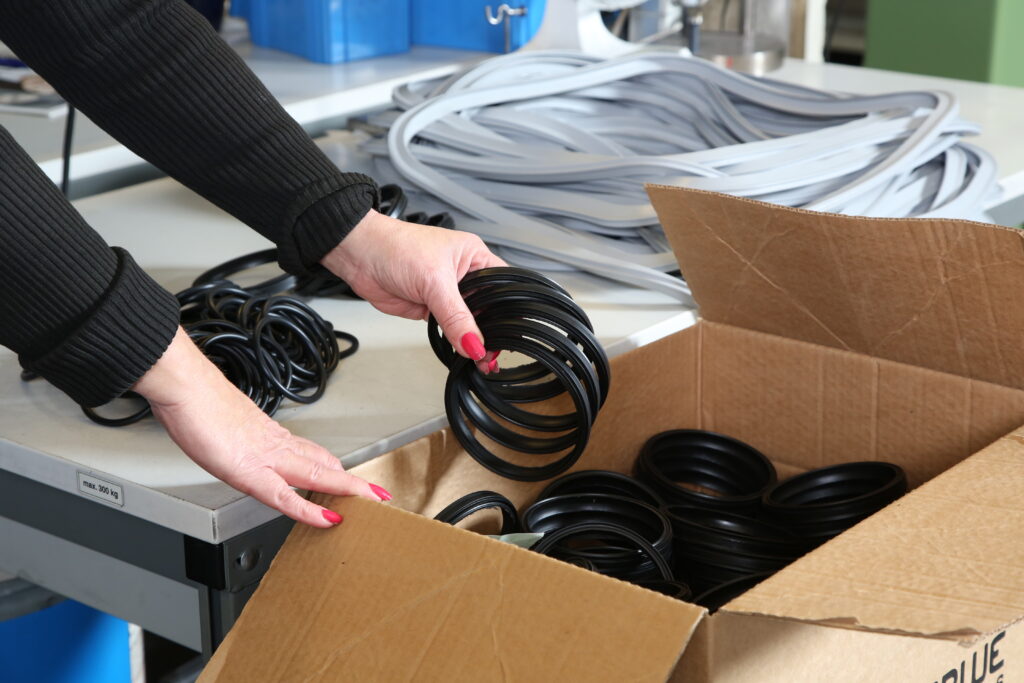
Ravelast Polymers develops and manufactures customized rubber, polyurethane, and silicone solutions, ranging from molded components and technical seals to roller coatings and wear protection systems. Rather than offering off-the-shelf products, the company works closely with customers to identify the optimal material, hardness, and manufacturing method for each application.
“We rarely start from the material itself. Most development projects begin with a customer challenge. Our job is to find a solution that fits the operating environment, performance requirements, and lifecycle expectations,” says Matti Junnila, Development Manager at Ravelast Polymers.
This customer-driven approach has helped the company build long-term partnerships across multiple industries, often supporting customers through every stage of product development, from material selection and design to manufacturing and quality assurance.
From Circular Economy to Industrial Reality
Sustainability is becoming an increasingly important driver of innovation in the polymer industry. At Ravelast, one of the most promising development areas is the integration of recycled and bio-based raw materials into technical rubber compounds.
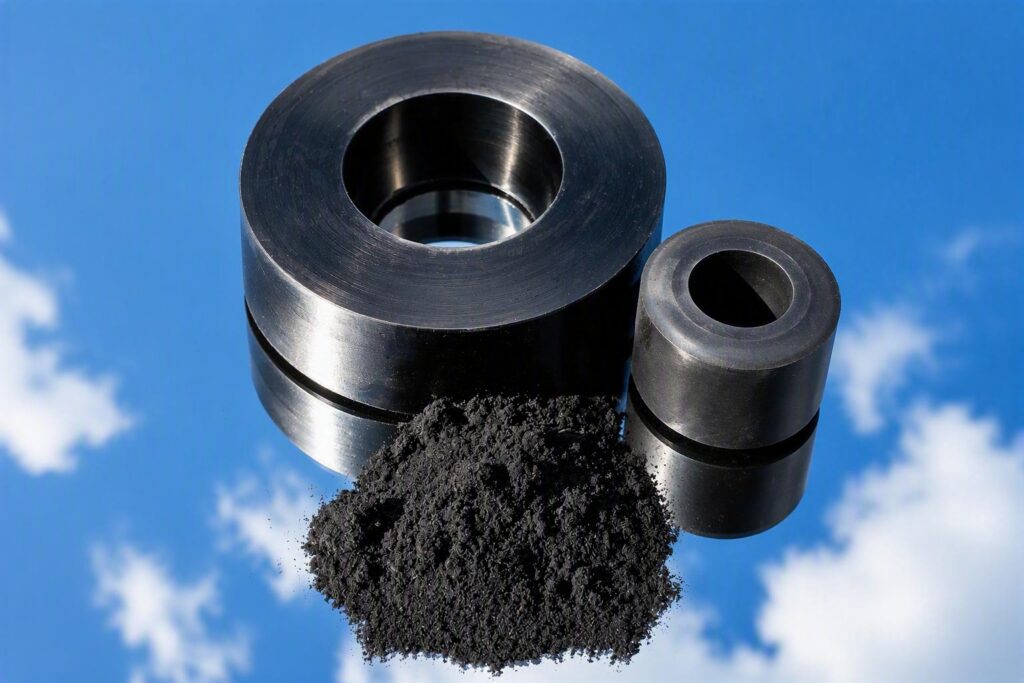
The company’s RavEco material already contains approximately 85 percent bio-based and recycled content. While many sectors are seeking ways to reduce their environmental footprint, creating circular solutions for elastomers remains technically demanding.
“Unlike many plastics, rubber cannot simply be melted and reused. Rubber, silicone, and polyurethane belong to a group of materials called thermosets, which require entirely different approaches when it comes to recycling and material recovery,” Junnila explains.
The development work began through collaboration with Finnish recycling partners and material suppliers. Recycled rubber fractions originating from tire and vehicle recycling streams are already being tested and utilized in selected applications. At the same time, the company is actively exploring future opportunities for reusing polyurethane waste streams.
This combination of rigorous quality control and material innovation allows the company to pursue circular economy goals without compromising technical performance. However, sustainability alone is not enough for industrial customers.
“Customers naturally appreciate environmental benefits, but reliability comes first. Every batch is tested for hardness, tensile strength, elasticity, density, and other critical properties. We need to know that the material will perform exactly as expected in the customer’s process,” says Junnila.
Innovation Through Collaboration
Research and development have become an increasingly important part of Ravelast’s operations as environmental requirements become stricter, material innovation is increasingly becoming a competitive advantage. At the same time, evolving chemical regulations across Europe continue to drive demand for alternative raw materials and new product concepts.
One example is the company’s patented elastic sensor technology, which opens new possibilities for industrial Internet of Things (IoT) applications and smart monitoring solutions. By integrating sensing capabilities directly into elastomer materials, manufacturers can gain valuable data about product performance and operating conditions.
“We collaborate with Finnish organizations including VTT, Aalto University, the University of Oulu, and Tampere University. Material suppliers and industrial partners also play an important role in bringing new technologies and concepts into commercial use,” Junnila says. “The best innovations often emerge when material expertise, practical industry needs, and research come together. There is still tremendous potential in developing new solutions for a more sustainable future,” he adds.
A Strategic Hub for Advanced Polymer Manufacturing
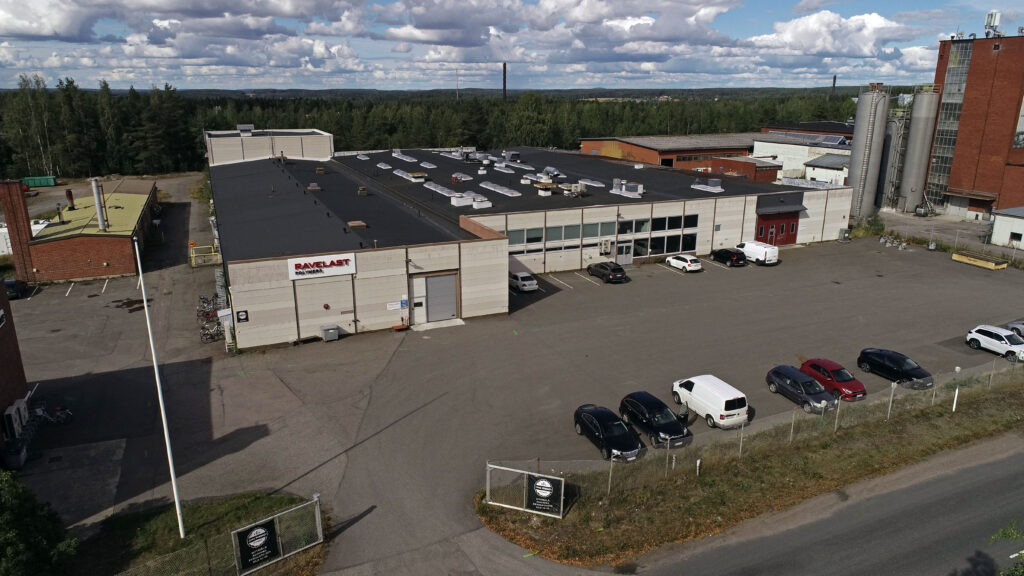
While Ravelast Polymers operates multiple facilities, Hyvinkää has become the company’s center for technical rubber expertise, product development, and manufacturing. In 2018, the company acquired the rubber production business of Polymer Components Finland, with roots dating back to 1926, and consolidated all its operations in Southern Finland under one roof.
“The acquisition strengthened both our manufacturing capabilities and our product development resources. By bringing our key operations together in Hyvinkää, we created a stronger platform for growth and innovation,” Junnila says.
The fully equipped R&D laboratory supports both customer-driven projects and long-term innovation initiatives. Engineers and material specialists work closely with customers to develop new formulations, improve durability, replace restricted substances, and identify more sustainable alternatives.
In total, the facility employs approximately 25 experts who combine technical expertise with practical craftsmanship across several areas, including molded rubber production, silicone product manufacturing, injection-molded plastics, rubber mixing, and machining.
Growing Through Expertise and Internationalization
Building on a century of manufacturing expertise accumulated in Hyvinkää, Ravelast Polymers is demonstrating how traditional industrial know-how can evolve into future-focused innovation. Through advanced materials development, strong customer partnerships, and a commitment to sustainability, the company is helping shape the next generation of industrial solutions from the heart of the Helsinki Ring of Industry.
At the same time, circular economy solutions, emerging material technologies, and products that support the green transition are expected to create entirely new opportunities for industrial manufacturing. According to Junnila, Finnish expertise in elastomers and industrial materials has significant potential in European markets, particularly as manufacturers seek more sustainable and technically advanced solutions.
“Finnish materials expertise is top-notch and we have strong opportunities to bring that know-how to a broader European market,” he says.
For manufacturers looking to grow, the Helsinki Ring of Industry offers what businesses value most: skilled talent, strong logistics, collaborative innovation networks, and room to expand in a stable, predictable business environment.
Ravelast Polymers
Hyvinkää unit has been an influential figure in this field since 1926 and Ravelast Oy acquired the technical rubber production unit 2018. Today the company have four main product lines in Hyvinkää: molded rubber product series, silicone product series, injection molded plastic product series and rubber fabrication line for single to small series of larger size. Ravelast Polymers’ R&D laboratory is also located at the same site.
Text: Katja Humalainen
Photos: Ravelast Polymers